GTA 6 map puts environmental detail ahead of sheer scale

Rockstar Games is approaching the open world of Grand Theft Auto 6 with an ambition that extends well beyond creating a larger map.
The studio wants players to feel that every corner of its fictional setting has a reason to exist, with carefully constructed environments that reward curiosity rather than simply providing more ground to cover.
That philosophy emerged in an extensive interview with Edge magazine, where Rockstar North co-studio lead Aaron Garbut discussed the thinking behind the game’s world design. Although the scale of GTA 6 has already attracted considerable attention, the developers appear equally focused on making its individual locations feel convincing and inhabited.
According to Edge, the game’s playable world approaches the combined scale of Grand Theft Auto 4, Grand Theft Auto 5 and Red Dead Redemption 2. However, Rockstar is not relying on geographical expansion alone to distinguish its latest project. Instead, the studio is placing considerable emphasis on environmental storytelling, handcrafted details and the sense that seemingly insignificant places have their own identities.
Garbut revealed that GTA 6 contains an order of magnitude more interior locations than previous entries in the franchise. This represents a substantial shift in how Rockstar approaches exploration, particularly for a series whose open worlds have traditionally offered enormous outdoor environments but more limited opportunities to enter ordinary buildings.
The developer also described an unusually meticulous approach to individual locations. Even relatively inconspicuous areas, including narrow alleyways and places players might encounter by chance, have received deliberate attention from the development team. Rather than treating these spaces as transitional scenery, Rockstar wants them to contribute to the overall personality of the world.
The amount of work behind this approach is apparently considerable. Garbut explained that even after spending years exploring the game during development, he continues to encounter details and discoveries he had not previously noticed. That observation offers an interesting indication of just how much environmental content Rockstar hopes to accommodate.
One particularly revealing example concerns the interiors of ordinary residential properties. As described in the Edge interview, entering a stranger’s home is intended to feel like stepping into somebody else’s private life. Family photographs, personal belongings and everyday household clutter help establish the identity of the people who supposedly live there.
These details are not simply decorative additions. They are intended to communicate stories without requiring traditional dialogue, missions or explanatory text.
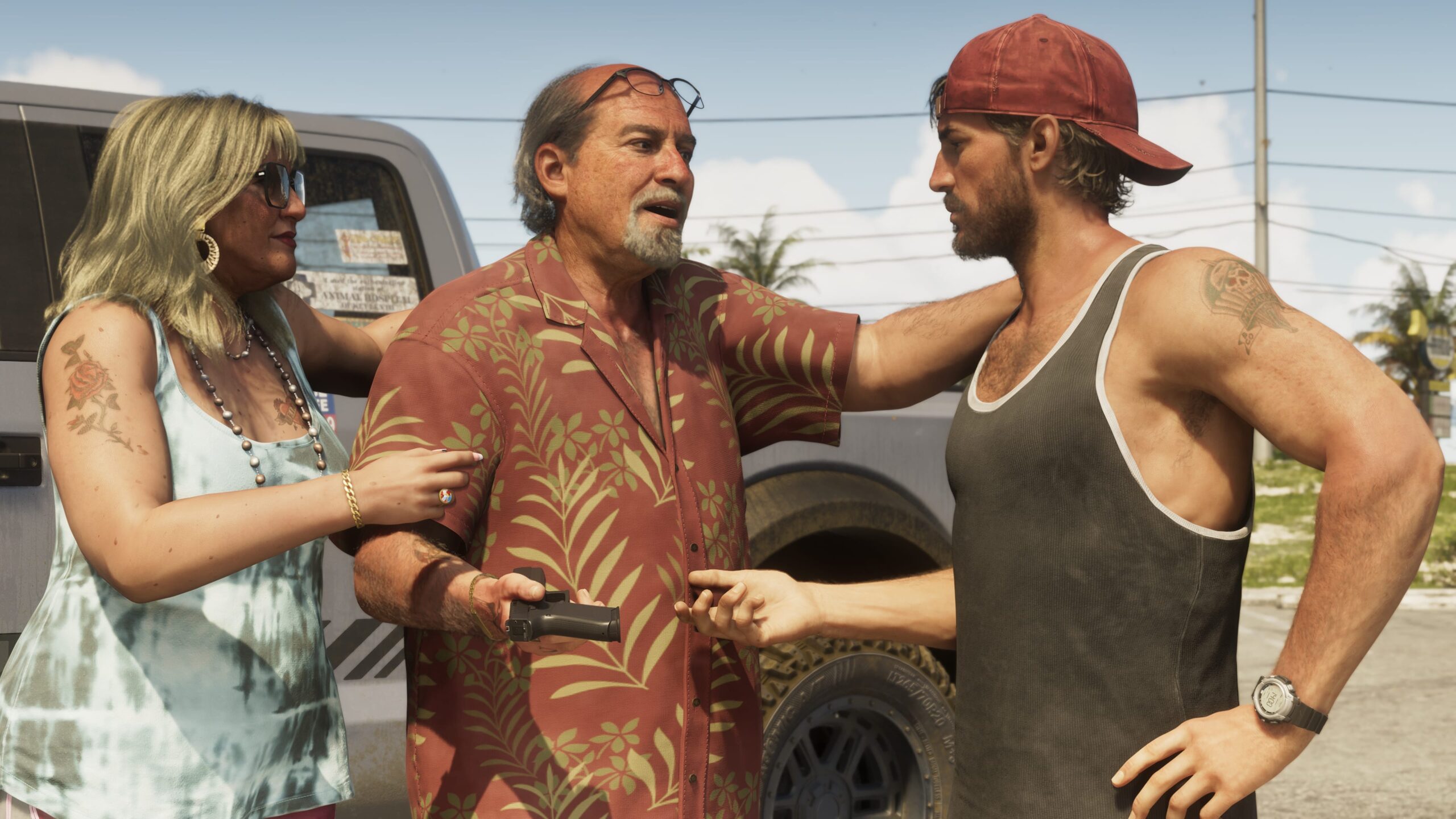
Garbut recalled an encounter with a house containing photographs of a family dog. Upon entering another room, the development team discovered the actual animal and the aftermath of what appeared to be an extended period without supervision. The property had been thoroughly trashed, with the dog’s mess scattered across the floor.
It is a small, almost humorous environmental detail, but it illustrates the kind of thinking Rockstar is bringing to GTA 6. Even an otherwise unremarkable house can contain an unexpected story, giving players something to discover beyond the immediate objectives of a mission.
This philosophy also recalls an ambition that has become particularly memorable in open-world game development. During the promotional campaign for The Elder Scrolls V: Skyrim, Bethesda’s Todd Howard famously emphasised that distant mountains were not merely scenery. Players could actually travel to the summit and explore what lay beyond the horizon.
The same promise of meaningful exploration has resurfaced in discussions surrounding other major releases, including Borderlands 4. However, Rockstar’s approach appears to place particular weight on the density of its environments, ensuring that exploration remains rewarding even when players are nowhere near a major landmark.
For GTA 6, this could have implications beyond simply making its map feel more alive. A world filled with recognisable homes, believable interiors and small environmental narratives could give players more reasons to spend time outside the main storyline. Exploration would become less about travelling between mission markers and more about discovering what exists within the world itself.
There is, however, another challenge Rockstar must address. The studio has also discussed its ambitions to give players greater freedom to establish their own lives within the game, potentially bringing the series closer to role-playing experiences than ever before. Yet that ambition requires careful balancing, particularly when player freedom, narrative pacing and a tightly authored experience must coexist.
The distinction matters because a large open world is not necessarily an engaging one. Rockstar’s challenge is to make Vice City and its surrounding regions feel like places that continue to exist independently of the player, with their own inhabitants, routines and unexpected stories.
If the studio can deliver on that vision, GTA 6 may distinguish itself not simply through the size of its world, but through the remarkable amount of thought invested in the places players might otherwise have walked straight past.
Conversation 0 Comments